Joint & Bone Health
Ayurveda for Knee Pain & Osteoarthritis
Physician-led Ayurvedic programs for knee pain and stiffness — oil therapies including Janu Basti, diet and gentle movement — and the limits you should know about.
Physician-led Ayurvedic programs for knee pain and stiffness — oil therapies including Janu Basti, diet and gentle movement — and the limits you should know about.
Medically reviewed by Dr. Nirmal P Raj & Dr. Chanthni Nirmal, BAMS, MD (Ayurveda) — Santhwana Siddha Clinic, Chalachal Siddha Varma Vidhyashala
Knee pain, most often from osteoarthritis, is one of the commonest reasons people travel to Kerala for Ayurveda. Ayurveda treats it as a Vata-type joint disorder (Sandhivata) and uses warming, lubricating therapies aimed at easing pain and stiffness, alongside diet, weight management and exercise. Programs typically run two to three weeks. They help manage symptoms; they do not regrow cartilage or replace a knee replacement when one is needed. This page covers the programs themselves — for the evidence and what to expect day to day, read our knee pain and osteoarthritis guide. Who tends to benefit most: people with mild to moderate osteoarthritis-type knee pain and stiffness who want a structured program of therapy, diet and movement, and who have already had the knee assessed. What a program usually includes: a consultation and examination, daily oil therapies for the legs and knees, steam, internal herbal medicines where indicated, a joint-friendly diet and a written home-exercise plan. A good centre will ask for your X-rays or MRI and your medication list before accepting you.
Ayurveda classes degenerative knee pain as Sandhivata, a Vata disorder in which dryness and wear in the joint lead to stiffness, pain and cracking. Weak digestion, accumulated toxins (Ama), ageing, cold exposure, injury and excess body weight are all seen as contributing factors. Where there is heat, redness and swelling the picture may be classed differently, which is why a proper consultation and conventional assessment come first. Our guide to arthritis and Panchakarma explains the wider framework. Ayurveda also stresses that the knee carries your body weight, so a Kapha-reducing, warm, cooked diet and steady weight management are treated as part of therapy rather than extras, and that cold, damp conditions and long periods of sitting without movement tend to worsen stiffness. This is consistent with what orthopaedic and physiotherapy advice recommends: keep moving gently, strengthen the thigh muscles and protect the joint.
Warm medicated oil held in a dough ring around the knee for 20–40 minutes to lubricate and soothe the joint.
Warm herbal-oil massage of the leg or whole body to improve circulation and reduce Vata.
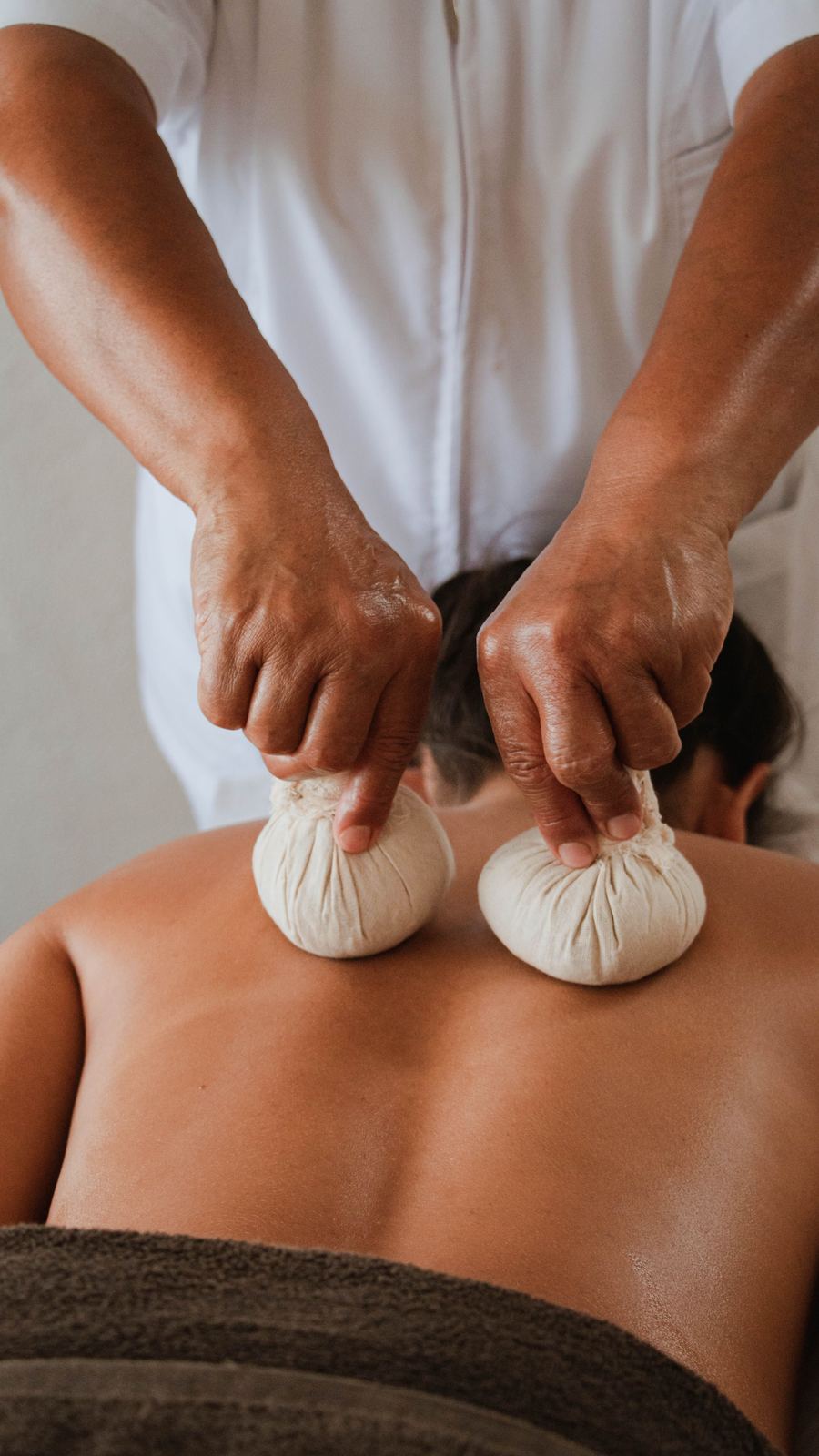
Massage with warm medicated rice boluses to nourish tissue and ease stiffness.
Medicated enema therapy, considered the principal treatment for Vata disorders; used selectively under supervision.
No responsible source claims a cure. Ayurvedic therapy can reduce pain and stiffness and improve function for many people, but it cannot regrow cartilage or reverse advanced joint damage.
Janu Basti is an Ayurvedic therapy where a ring of dough is placed around the knee and filled with warm medicated oil for 20–40 minutes to warm, lubricate and ease the joint.
Most physicians recommend 14–21 days for a structured program, followed by diet, weight and exercise guidance at home.
External therapies are generally compatible, but herbal medicines can interact with some drugs. Tell your Ayurvedic physician your full medication list and keep your own doctor informed.
Yes if your knee is hot, red or swollen, locks or gives way, or after any injury. Bring existing X-rays or MRI reports to your Ayurvedic consultation.
Yes, and many people find the combination helpful. Make sure both practitioners know about the other treatment.
No. Ayurvedic therapy aims to manage pain and stiffness in mild to moderate osteoarthritis. A knee replacement is surgery for advanced joint damage, and the decision should be made with an orthopaedic surgeon. Some people use Ayurveda to manage symptoms while they decide, or to support recovery afterwards, but it should not delay a recommended operation.
Low-impact activities such as walking, cycling and swimming, plus gentle strengthening of the thigh muscles, are generally recommended. A physiotherapist can tailor a plan to you, and good Ayurvedic programs include guided movement alongside the oil therapies.
Yes. Extra body weight loads the knee, so even modest weight loss often reduces pain. Ayurvedic programs address this through a Kapha-reducing diet and routine, which you can continue at home.
Often yes, with planning. Tell the centre about your mobility needs in advance, ask about step-free rooms and treatment areas, and arrange assisted airport transfers.