Joint & Spine Care
Kati Basti: Warm Oil Therapy for the Lower Back
A signature Ayurvedic therapy in which warm medicated oil is held over the lumbar spine — used for chronic lower back pain and stiffness.
A signature Ayurvedic therapy in which warm medicated oil is held over the lumbar spine — used for chronic lower back pain and stiffness.
Medically reviewed by Dr. Nirmal P Raj & Dr. Chanthni Nirmal, BAMS, MD (Ayurveda) — Santhwana Siddha Clinic, Chalachal Siddha Varma Vidhyashala
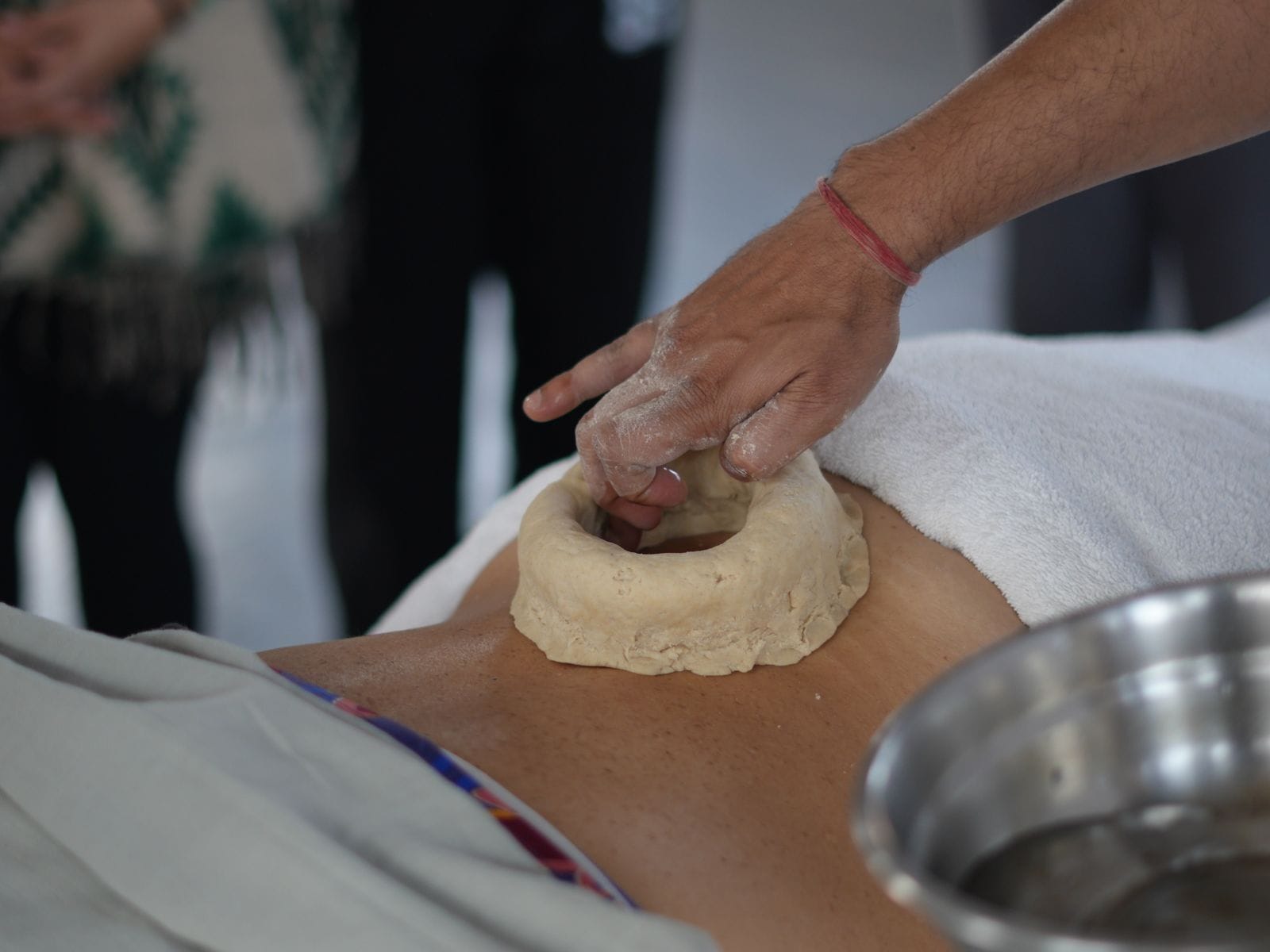
Kati Basti (also written Katibasti or Kati Vasti) is an Ayurvedic external therapy for the lower back. 'Kati' means waist or lower back and 'basti' here means retaining — a ring of dough is fixed over the lumbar spine and filled with warm medicated oil, which is held there for a set time. The oil is kept at a steady warmth throughout. It is among the most common therapies prescribed in Kerala for non-specific chronic lower back pain and stiffness, usually as part of a 14–21 day program. It is a complement to proper diagnosis, not a substitute for it: see our guides to chronic back pain and sciatica and lumbar disc pain. Kati Basti is closely related to Janu Basti (for the knee) and Greeva Basti (for the neck), which use the same dough-ring method on different parts of the body. Because the oil is held in direct contact with the skin for a sustained period, a good centre will check the skin, ask about allergies, and choose an oil to suit your dosha and condition. Expect the therapist to be the same gender as you and to keep you comfortably covered throughout.
Targeted spinal and muscular therapies to relieve chronic tension, stiffness, and nerve-related pain.
A whole-body approach to reducing joint pain, stiffness, and inflammation through detoxification and targeted therapies.
Kati Basti is used mainly for chronic, non-specific lower back pain and stiffness, including pain linked to muscle tension or age-related spinal wear, as part of a physician-prescribed program.
No. The oil is warm, not hot, and the sensation is usually described as soothing. Tell the therapist immediately if it feels too hot or uncomfortable.
The oil is retained for about 20–40 minutes; with preparation massage and rest, plan on 60–75 minutes in total.
A course is usually daily for 7–14 days within a 14–21 day program. Your physician sets the number after reviewing your condition.
It may help manage pain and stiffness, but a herniated disc is a structural problem that needs proper diagnosis. Share your MRI with the Ayurvedic physician, and do not delay surgical assessment if it is advised.
It is generally avoided unless a qualified physician specifically advises otherwise. Always disclose pregnancy before any therapy.
A full Kati Basti needs a trained therapist, the dough ring, controlled oil temperature and a prescribed medicated oil, so it is not something to attempt at home. A simple warm-oil self-massage of the back is a gentler, safer home practice.
The physician chooses a medicated oil for your dosha and condition — classical Vata-pacifying oils are often used. Ask which oil is used and whether you have any allergies to its ingredients, such as sesame.
Rest for a short while, avoid cold air and cold water immediately afterwards, and follow your therapist's advice on when to wash off the oil — usually after about an hour. Keep the area warm.
They use the same technique — a dough ring holding warm medicated oil — but on different areas: Kati Basti for the lower back, Janu Basti for the knee and Greeva Basti for the neck.