Joint & Bone Health
Ayurveda for Cervical Spondylosis
Physician-led Ayurvedic programs for chronic neck pain and age-related neck wear — Greeva Basti, oil therapies, posture care — and the symptoms that need urgent medical attention.
Physician-led Ayurvedic programs for chronic neck pain and age-related neck wear — Greeva Basti, oil therapies, posture care — and the symptoms that need urgent medical attention.
Medically reviewed by Dr. Nirmal P Raj & Dr. Chanthni Nirmal, BAMS, MD (Ayurveda) — Santhwana Siddha Clinic, Chalachal Siddha Varma Vidhyashala
Cervical spondylosis — age-related wear of the neck spine, often aggravated by long hours at a screen — causes neck pain, stiffness and sometimes pain or tingling into the shoulder and arm. Ayurveda treats it largely as a Vata disorder of the neck and uses local oil therapies, steam and Vata-pacifying care, together with posture and lifestyle changes. Programs usually run two to three weeks. They aim to reduce pain and stiffness; they cannot reverse structural changes, and symptoms such as arm weakness or unsteady walking need urgent conventional assessment. For therapies and posture advice in detail, read our cervical spondylosis and neck pain guide. Who tends to benefit most: people with chronic, non-specific neck pain and stiffness, often desk workers or older adults, without warning signs of nerve compression. What a program usually includes: a consultation and examination, daily neck and shoulder oil therapies with steam, internal herbal medicines where indicated, posture and desk-ergonomics advice, and a home-exercise plan. Bring any X-ray or MRI reports so the physician can plan safely.
In Ayurveda, stiffness, dryness and pain in the neck that ease with warmth and worsen with cold and stress are a Vata pattern. Poor posture, prolonged static positions, cold exposure, irregular routine and weak digestion are considered aggravating factors. Treatment aims to warm and lubricate the tissues, relax muscle spasm and calm the nervous system, while correcting the habits that strain the neck. Always have new or spreading arm symptoms checked by a doctor first. Ayurveda also looks beyond the neck itself: poor sleep, stress, cold exposure and weak digestion are all seen as feeding the Vata imbalance, so programs combine local therapies with routine, diet and relaxation practices. These lifestyle elements overlap with standard advice for neck pain — regular movement, a good desk set-up and enough sleep.
Warm medicated oil held in a dough ring around the neck for 20–40 minutes to relax muscles and ease stiffness.
Warm herbal-oil massage with herbal steam to reduce muscle tension and improve circulation.
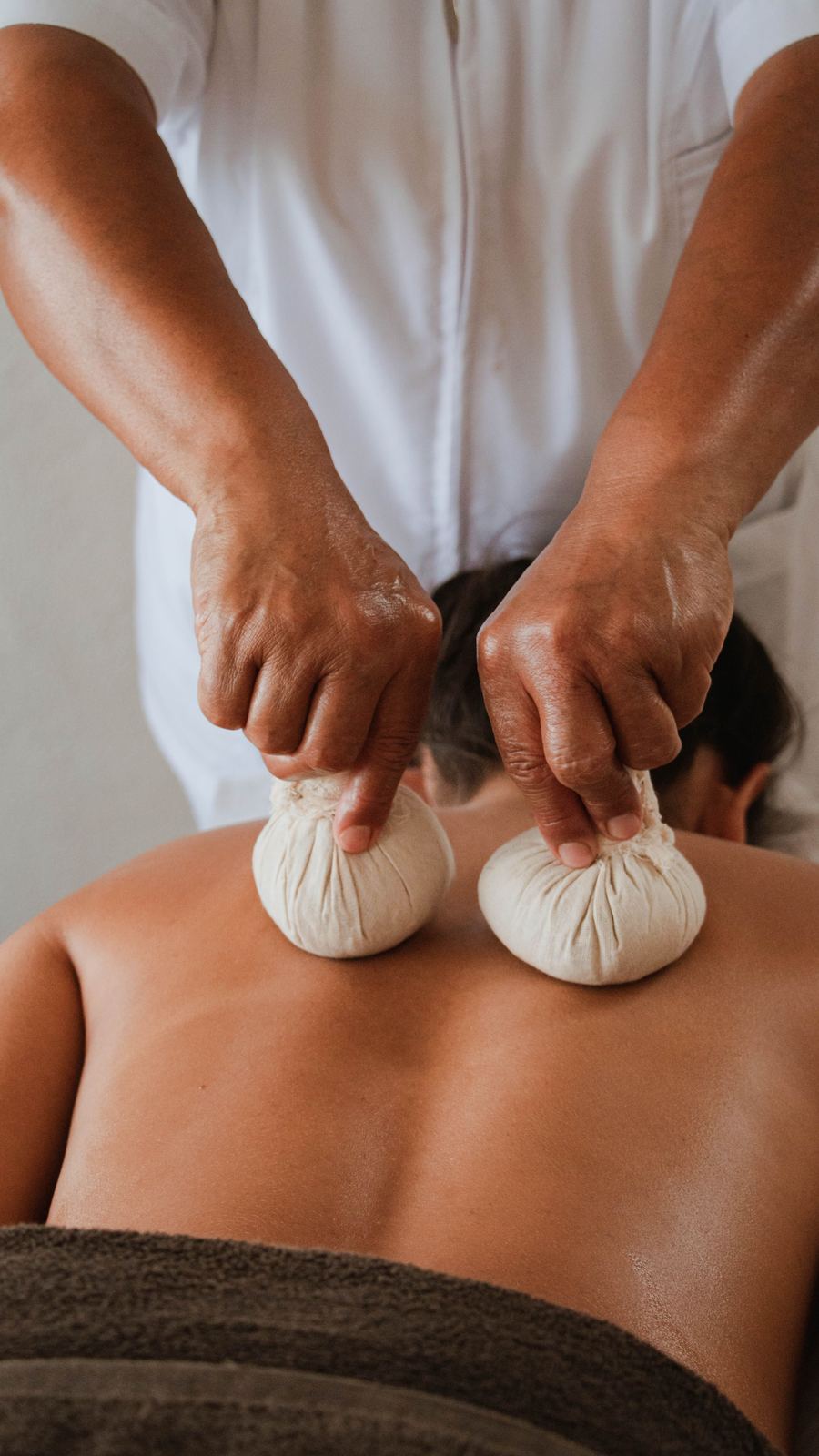
Massage with warm herbal poultices to relieve stiffness and pain.
Medicated enema therapy for deeper Vata imbalance; used selectively under physician supervision.
No. Age-related changes in the neck spine cannot be reversed, but Ayurvedic therapy and lifestyle changes can reduce pain and stiffness and improve function for many people.
Greeva Basti is an Ayurvedic therapy in which warm medicated oil is retained in a dough ring around the neck for 20–40 minutes to relax muscles and ease stiffness.
Most physicians recommend 14–21 days for a structured program, followed by posture and exercise changes at home.
Seek urgent assessment for arm or hand weakness, spreading numbness, loss of hand dexterity, unsteady walking, or bladder or bowel changes. These can indicate nerve or spinal-cord compression.
Yes. Many people combine posture and strengthening work with physiotherapy and Ayurvedic oil therapies. Tell both practitioners about the other treatment.
Often yes. Raising the screen to eye level, taking movement breaks every 30–45 minutes and using a supportive pillow are simple changes consistent with both Ayurvedic and physiotherapy advice.
Surgery is generally considered when nerve or spinal-cord compression causes progressive weakness, loss of hand function, balance problems or severe pain that does not respond to conservative treatment. That decision belongs to a spine specialist, not to an Ayurvedic centre.
Age-related wear is the main cause, but long periods of looking down or sitting with the head forward strain the neck and can make symptoms worse. Raising your screen to eye level and taking regular movement breaks helps.
No. It is usually avoided with skin problems over the neck, fever, acute injury or inflammation, and in some other situations. The physician decides after examining you.
Usually yes, but tell your Ayurvedic physician about every medicine you take, and keep your own doctor informed. Do not stop prescribed medication without medical advice.