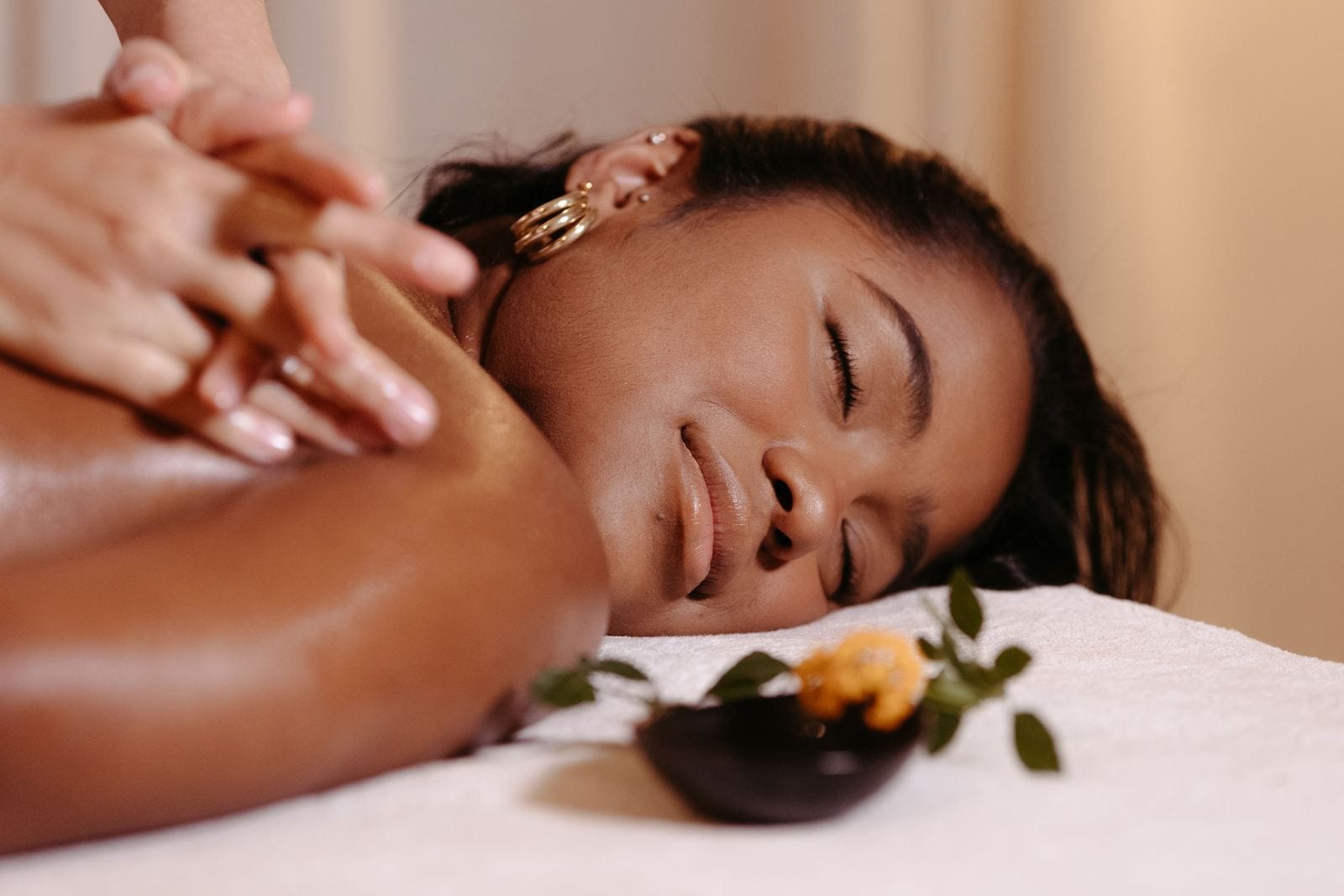
Abhyanga — warm oil massage — is a cornerstone of Ayurvedic daily routine (Dinacharya), and a simplified self-massage version is something you can do at home in 10–20 minutes. It will not replicate a two-therapist clinical session, but it is a gentle, low-cost way to build a calming routine.
Pitta-dominant (warm, sensitive skin): coconut or sunflower oil — cooling and gentler.
Kapha-dominant (heavy, oily skin): use a small amount of light oil, possibly more briskly.
Not sure of your dosha? See our dosha guide; if in doubt, plain warm sesame oil is a common starting point unless you are allergic.
Step-by-Step Method
Warm the oil by standing the bottle in hot water for a few minutes; it should feel comfortably warm, not hot.
Sit or stand on a towel you do not mind staining; wear old clothes.
Start at the scalp with firm circular strokes, then massage the ears and face lightly.
Massage the neck and shoulders, then each arm: long strokes on the long bones, circular strokes on the joints.
Massage the chest with gentle strokes and the abdomen in a slow clockwise circle.
Massage the back and spine as far as you can reach, then each leg: long strokes on the long bones, circular on knees and ankles.
Spend a little extra time on the soles of the feet.
Rest for 10–15 minutes to let the oil absorb, then take a warm shower, washing off excess oil gently.
How Often
Classical advice is daily, but even 2–3 times a week is a reasonable start. Early morning before bathing suits most people; a foot massage before bed can help you settle for sleep — see Ayurvedic remedies for insomnia.
Who Should Avoid or Be Careful
Fever, acute illness or active infection.
Immediately after a heavy meal or with significant indigestion.
Broken, inflamed or infected skin, or severe skin conditions without medical advice.
Pregnancy — ask your doctor or an Ayurvedic physician first.
Sesame or other oil allergy — patch-test and choose a different oil.
Practical Tips
Keep a dedicated towel and a non-slip mat — oily floors are slippery.
Use a modest amount; you want a thin film, not dripping oil.
Wash oil-stained towels separately.
Stop if you feel unwell, dizzy or notice a rash.
Frequently Asked Questions
Warm sesame oil is the classic choice and suits many people, especially Vata types; coconut or sunflower oil is gentler for Pitta types. Avoid any oil you are allergic to and patch-test first.
Ten to twenty minutes is typical, followed by a short rest and a warm shower.
Daily is the traditional ideal, but two to three times a week is a sensible start. Skip it during fever, acute illness or right after a heavy meal.
Many women use gentle massage, but you should check with your doctor or an Ayurvedic physician first and choose a suitable oil and technique.
No. A clinic session often uses two therapists, dosha-specific medicated oils and steam. Home self-massage is a simplified daily-care practice.